
| Key takeaway | What it means for your GPA |
|---|---|
| A Weighted GPA Calculator adds bonus points | AP, Honors, and IB classes can push GPA above 4.0. |
| AP usually gets +1.0 | An A in AP often counts like 5.0 on a 5.0 scale. |
| Honors often gets +0.5 | Honors can lift your GPA without the full AP jump. |
| IB HL and IB SL may weight differently | Many schools treat HL like AP, but SL varies. |
| Scales change the “look” of your GPA | A 4.6 on a 5.0 scale is not “worse” than a 3.9 on a 4.0 scale. |
| Colleges read GPA with context | They compare your transcript + course rigor, not just one number. |
Weighted GPA Calculator: what it is and why it matters
A Weighted GPA Calculator helps you see how hard classes affect your GPA. A regular GPA treats every class the same. A weighted GPA gives extra points for harder classes like AP, Honors, and IB. That extra point can change class rank and how your transcript looks.
A student can earn all A’s and still have two very different GPAs. One student might take mostly regular classes. Another might take AP courses every year. The grades look the same, but the effort is not the same. Weighted GPA fixes that by showing course difficulty.

If you want a quick number, use the high school GPA tool on the high school GPA calculator page: high school GPA calculator. For long-term totals, use the cumulative GPA calculator.
Weighted vs unweighted GPA: same grades, different story
Weighted GPA vs unweighted GPA is one of the most confusing school topics. An unweighted GPA uses a 4.0 scale and does not care if a class is hard or easy. An A is an A. That makes it easy to compare students across schools.
A weighted GPA adds bonus points to certain classes. Schools do this so they can reward students who choose harder work. This matters because two students can both have a 4.0 unweighted GPA, but one took five AP classes and one took none.

If you want a clean breakdown with examples, use the weighted vs unweighted GPA guide. If you want the short version, see weighted vs unweighted GPA explained.
AP course weighting rules on a 5.0 scale
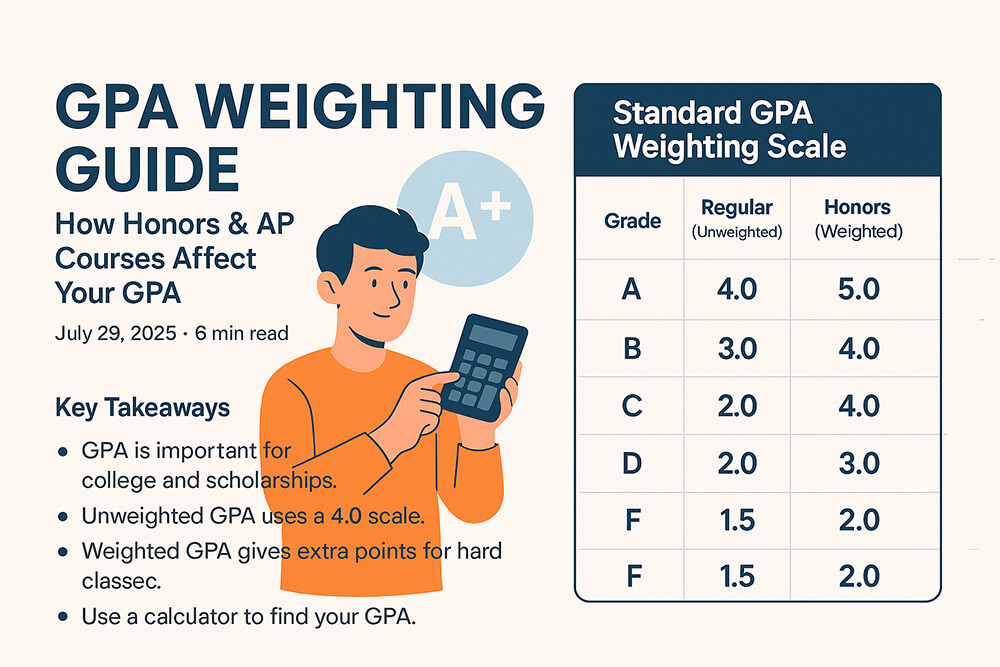
Most schools give AP classes the biggest GPA boost. On a 5.0 weighted scale, AP often adds +1.0 to your grade points. That means an A in AP can count as 5.0 instead of 4.0.
Here is the common setup:
- A in AP = 5.0
- B in AP = 4.0
- C in AP = 3.0
- D in AP = 2.0
- F in AP = 0.0
This is why a student can graduate with a GPA like 4.6 or 4.8. They did not “break the scale.” They just earned bonus points from AP classes.
For rules that match your school, check GPA weighting for Honors and AP and use the weighted GPA guide.
Honors weighting: the 0.5 boost that adds up
Honors classes often sit in the middle between regular and AP. Many schools add +0.5 to honors courses. So an A in Honors may count as 4.5 instead of 4.0.
A common honors pattern looks like this:
- A in Honors = 4.5
- B in Honors = 3.5
- C in Honors = 2.5
Some schools do smaller boosts like +0.25, and some schools do no honors weighting at all. That is normal. Your district sets the rules, and they can change year to year.
If your weighted GPA feels “low,” you may not be doing anything wrong. Your school might only weight AP and IB. To compare fairly, keep both numbers on hand. Use the weighted vs unweighted GPA calculator page and the high school GPA calculator guide.
IB weighting: HL vs SL and what colleges see
IB classes can be weighted, but the rules depend on the course level. Many schools treat IB Higher Level (HL) like AP. That means HL can get a +1.0 boost on a 5.0 scale. IB HL can be one of the hardest high school tracks, so schools often reward it.
IB Standard Level (SL) is different. Some schools treat SL like a regular class with no extra points. Some treat SL like Honors and add +0.5. This is why two IB students in different schools can have different weighted GPAs.
Grades like TOK and the Extended Essay matter for the IB diploma, but they often do not count in GPA math.
For clean IB conversion help, use the IB to GPA conversion guide. If your school uses a special rule, check how school districts calculate GPA.
4.0 vs 5.0 vs 6.0 scales: how the numbers change
A Weighted GPA Calculator must match your school’s scale, or the final number will look wrong. The same grades can produce very different GPAs across scales.
- 4.0 scale: unweighted (A = 4.0 always)
- 5.0 scale: AP/IB can reach 5.0
- 6.0 scale: dual enrollment may reach 6.0
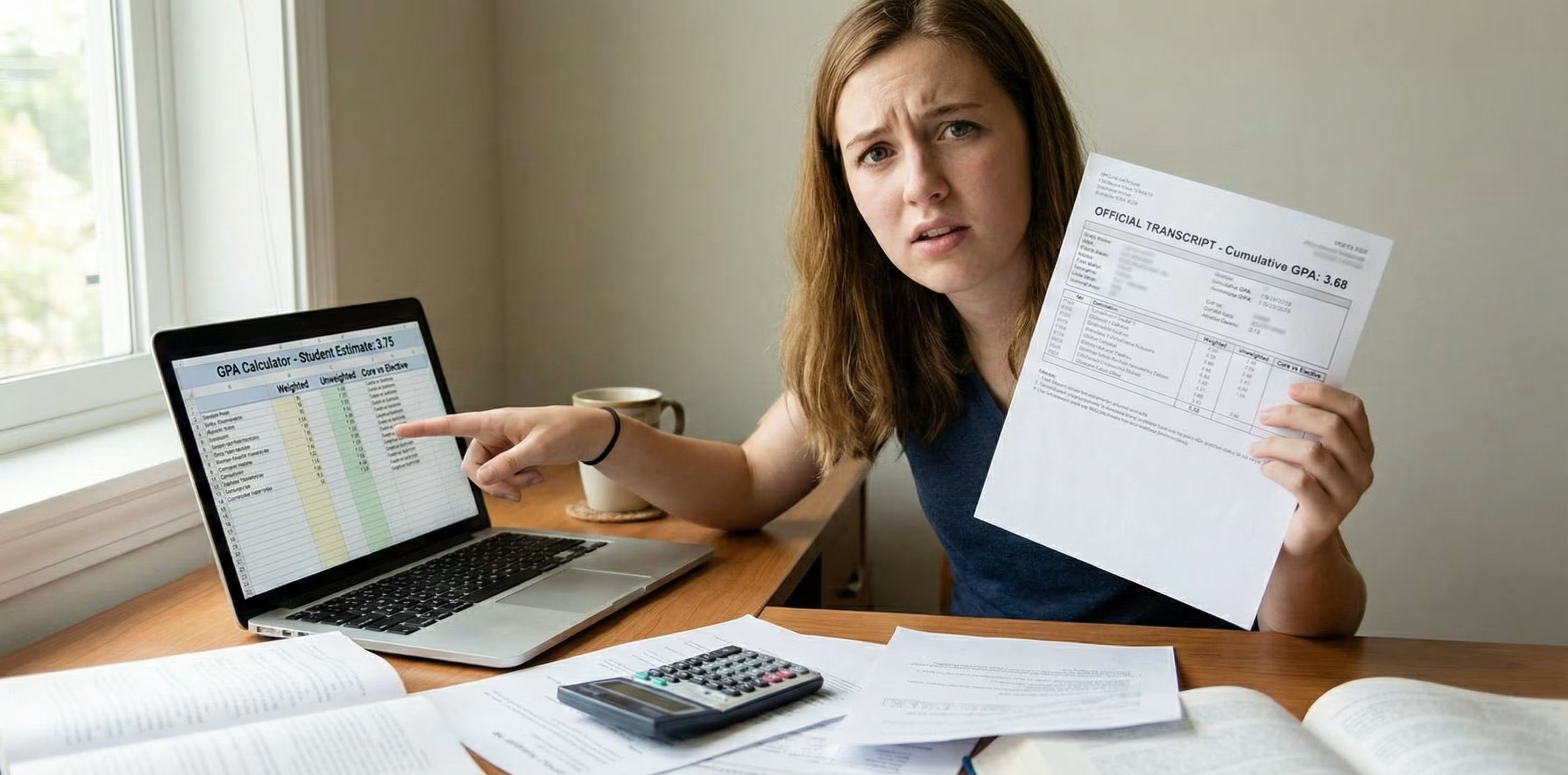
A 6.0 scale does not mean your school is “easier.” It often means your school offers more course tiers. Colleges usually read your school profile and understand the scale.
If you want a full breakdown, use the 4.0 vs 5.0 vs 6.0 GPA scales guide and the 5.0 GPA scale guide.
100-point weighted GPA scales: percent grades made simple
Some schools use a 100-point scale instead of letter grades. You might see an 89.5, a 93.2, or a 97.0 on the report card. In these schools, weighting often works by adding points to certain classes.
Common examples:
- Regular class: 90 = 90
- Honors class: 90 becomes 93 or 95
- AP class: 90 becomes 95 or 100
This system can feel messy because it mixes percent grades with bonus rules. Two schools can both use a 100-point scale and still weight in different ways.
If you need to convert percent grades to a 4.0-style number, use the percentage to 4.0 GPA conversion tool. If your district uses 100-to-5.0 rules, check the 100-point to 5-point conversion guide.
How to calculate weighted GPA using quality points
Weighted GPA uses quality points. You add up quality points for each class and divide by total credits. That is the whole math.
A simple formula looks like this:
Weighted GPA = total quality points ÷ total credits
Quality points come from your grade and the course level. An A in a regular class might be 4.0. An A in an AP class might be 5.0. Multiply that by the class credit value, then add all classes together.

If the math feels confusing, use the quality points vs GPA explainer and the GPA formula guide. For a quick result, use the college GPA calculator if you are working with college-style credits.
Credits and course levels: why one class can count more
A Weighted GPA Calculator must also know credits. Some classes count more because they meet more often or run all year. For example, a full-year course may count as 1.0 credit, while a semester course may count as 0.5.
Credit weighting can change your GPA even when grades stay the same. A B in a 1.0 credit class affects your GPA more than a B in a 0.5 credit class.

Many students miss this part and wonder why their GPA looks “off.” Fix it by checking your transcript credit values. Then match them inside your tool.
For deeper help, use the credit hour weighting GPA guide and the credits and course-level input guide.
Common weighted GPA mistakes that lower your number
Most GPA mistakes happen from small input errors. A Weighted GPA Calculator can only be right if the data is right.
Common problems include:
- You marked an AP class as “Regular”
- You used the wrong grading scale (4.0 vs 5.0)
- You forgot to enter credits
- You entered a semester class as a full-year class
- You used the wrong letter-to-point chart
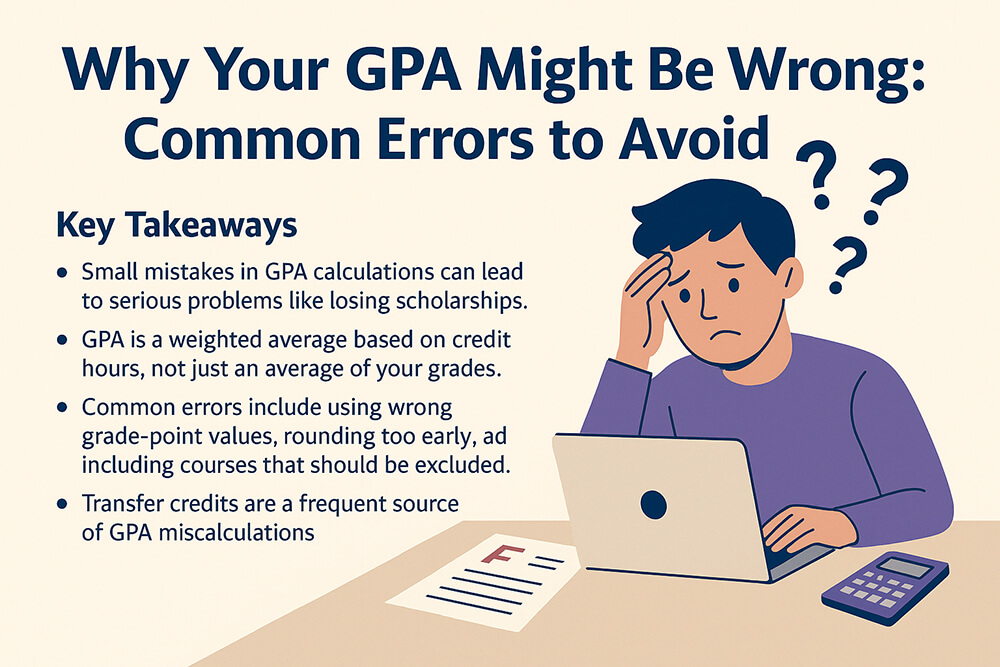
A fast fix is to check your classes one by one. Then compare your total to what the school prints.
If you want a checklist, use common GPA calculation errors to avoid and the letter to point GPA conversion guide. If your school uses pass/fail, see how pass/fail grades impact your GPA.
Why your GPA does not match your transcript (and fixes)
It feels scary when your GPA number does not match your transcript. In most cases, the reason is simple. Schools may use rules that students do not see.
These are the top causes:
- Your school uses weighted GPA only
- Your school drops some courses (like PE) from GPA
- Your district only counts core classes for rank
- Your school rounds grades in a special way
- Your transcript shows mid-year GPA, not final-year GPA
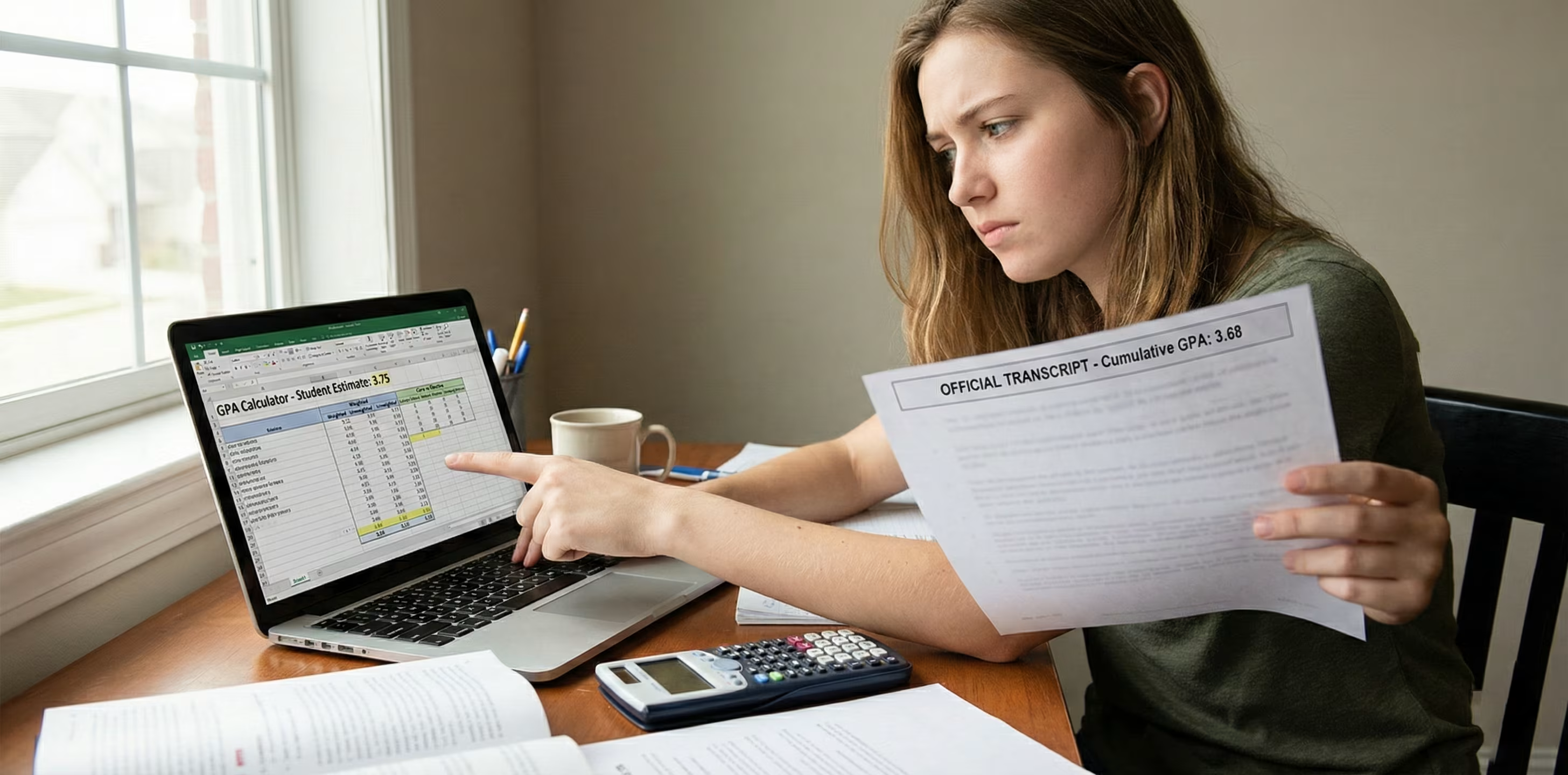
Start by checking what your school counts. Then match those rules in your calculator settings.
If you want a clean troubleshooting path, read why GPA does not match transcript and use the transcript GPA audit guide. If your grades include repeats, use the repeat course GPA recalculator.
Should you report weighted or unweighted GPA to colleges?
Students worry about reporting the “wrong” GPA. The key is simple: report the GPA your school shows, and label it clearly.
If your transcript shows both numbers, many schools tell students to report the weighted GPA, with the scale. If your school shows only one number, report that one. Colleges still read the transcript, course list, and school profile.
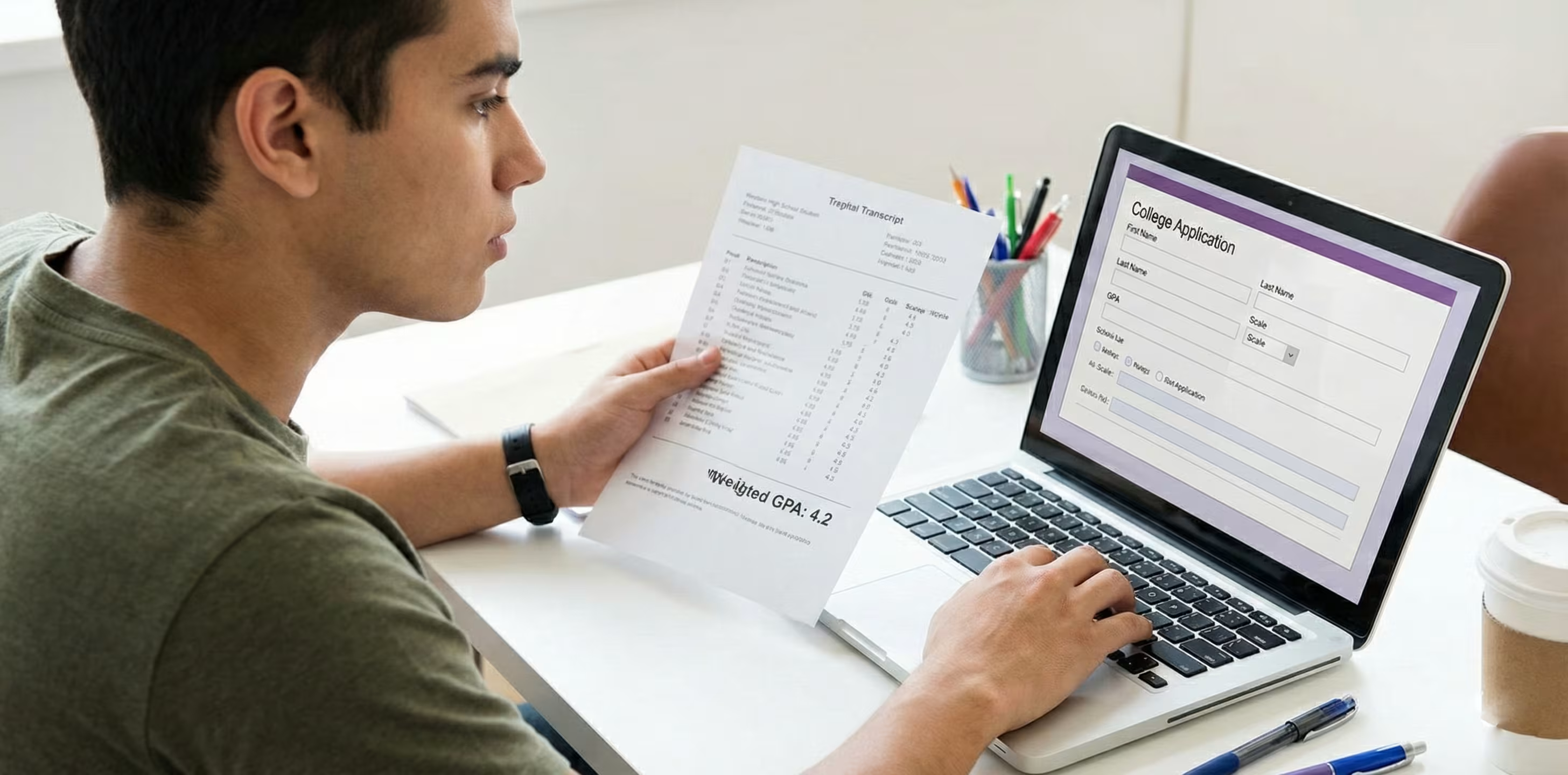
If your unweighted is higher than your weighted (it can happen), do not hide it. Report the number that matches the label.
For guidance with real examples, use should you report weighted or unweighted GPA and the weighted vs unweighted GPA. If you want to build both numbers fast, use the high school GPA calculator.
How colleges recalculate GPA for fair comparison
Colleges know schools use different rules. That is why many colleges recalculate GPA in their own way. They often focus on core subjects like math, English, science, and history. They may ignore local bonus points and re-score classes on a common scale.
This helps students from very different schools compete fairly. A 4.7 weighted GPA in one district might mean a very different thing in another. The recalculation process reduces that gap.
You can prepare by understanding your true performance. Track both:
- Unweighted GPA (your raw grades)
- Weighted GPA (your course rigor boost)
To learn why this happens, read the GPA inflation vs deflation guide and weighted GPA myths debunked. If you want to see how your GPA changes over time, try the GPA trend graph generator.
Build a custom weighted GPA scale for your school
Some students need a custom scale because their district uses special weights. You can still use a Weighted GPA Calculator if you match the tiers correctly.
Most schools follow tiers like:
- Regular (baseline)
- Honors (mid boost)
- AP/IB HL (big boost)
- Dual enrollment (sometimes the biggest boost)
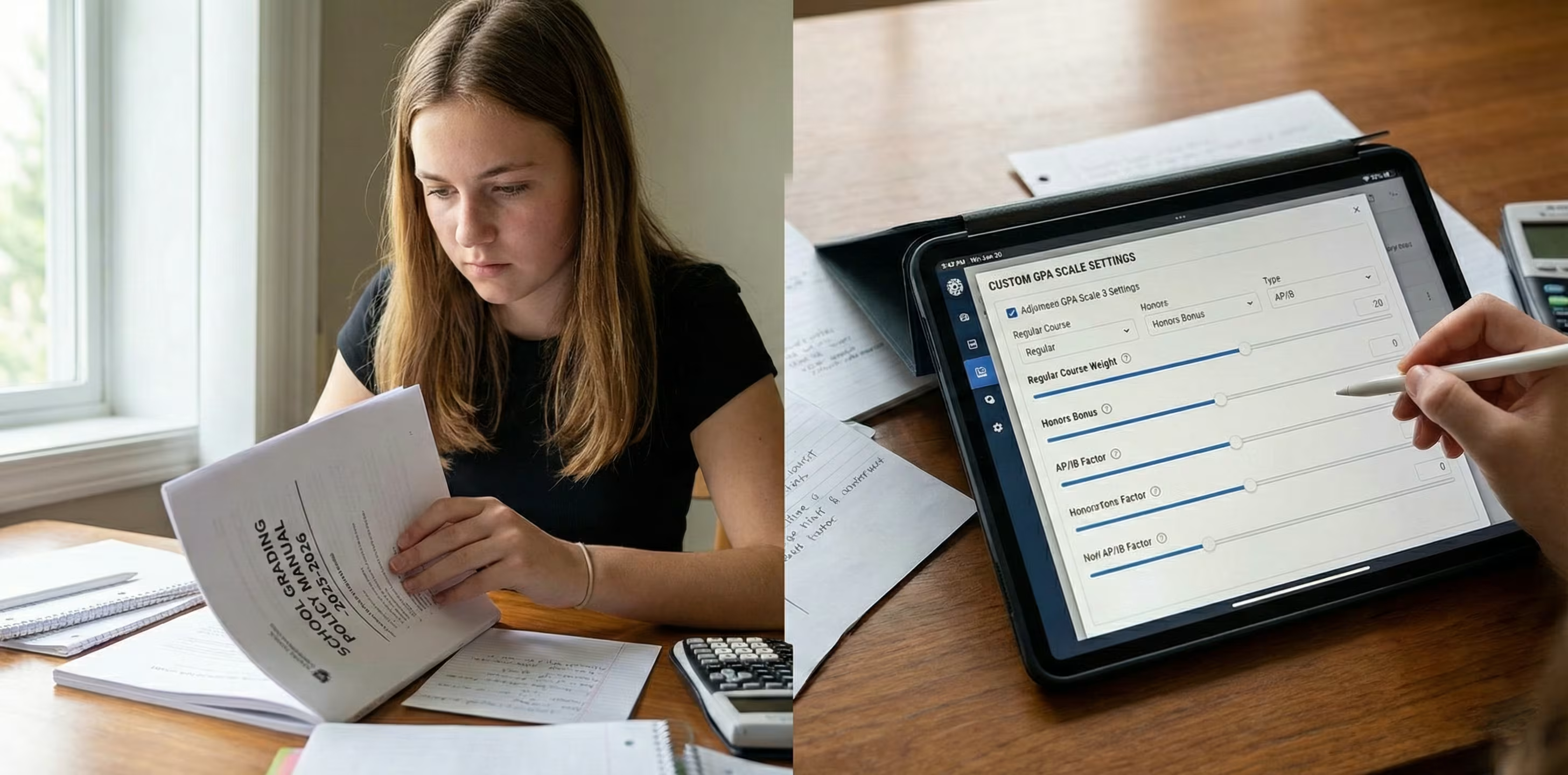
The goal is consistency. If your school gives +1.0 to AP and +0.5 to Honors, keep that rule across all courses. If your school does not weight Honors, set Honors to regular.
For a clear build guide, use how to build a custom weighted GPA scale and how school districts calculate GPA. If you want a simple comparison chart, see GPA scale comparison.
Dual enrollment and the 6.0 scale: what to watch for
Dual enrollment can change weighted GPA in a big way. Some schools count college classes as the highest tier. That can create a 6.0 scale where a top grade equals 6.0 quality points.
This can help students who take real college courses in high school. It can also create confusion during reporting. A 5.2 GPA might look “too high” to someone who only knows 4.0 scales. Your transcript and school profile explain the scale.
If your school uses dual enrollment, check these items:
- Does the class count as weighted?
- Does it count in class rank?
- Does it count as a core class?
For planning help, use the dual degree GPA splitter and the transfer credits GPA integrator. If you want a scale explainer, use the types of GPA scales guide.
International students: convert weighted GPA the right way
International students often face a tough problem. A weighted GPA may not exist in their school system. Many countries use 10-point, 12-point, or 100-point systems. A college in the U.S. still wants a 4.0-style GPA for quick comparison.
A good conversion starts with the right chart for your system. Do not guess. Small differences can change scholarship cutoffs.
Helpful tools include:
- international GPA converter guide
- china 100-point to 4.0 conversion guide
- uk class system grades to 4.0 conversion
- indian 10-point to 4.0 conversion
If your school also uses weighting, write the scale clearly (like “5.0 weighted GPA”) so admissions teams read it correctly.
Use a high school weighted GPA calculator fast and correctly
You can calculate weighted GPA by hand, but a good tool saves time and prevents mistakes. Use the high school GPA calculator to enter your classes, grades, credits, and course level.

A clean way to enter data is:
- List your classes from your transcript
- Add the correct credits (0.5 or 1.0)
- Pick the right level (Regular, Honors, AP, IB)
- Check your scale (4.0, 5.0, 6.0)
Then compare the result to your transcript. If it does not match, review course levels and rounding rules.
Start here: high school GPA calculator and how to calculate high school GPA. For long-term tracking across years, use the cumulative GPA calculator.
Frequently Asked Questions
What is a Weighted GPA Calculator?
A Weighted GPA Calculator is a tool that adds bonus points for harder classes like AP, Honors, and IB. It helps you estimate the GPA your school may report. If you want to calculate yours now, use the high school GPA calculator.
Can weighted GPA go above 4.0?
Yes. Weighted GPA can go above 4.0 because AP and some IB classes can count as 5.0 on a 5.0 scale. Some schools also use a 6.0 scale for dual enrollment. See the 4.0 vs 5.0 vs 6.0 GPA scales guide.
Is weighted GPA better than unweighted GPA?
Neither is “better.” They show different things. Unweighted shows your raw grades. Weighted shows grades plus course difficulty. Compare both using the weighted vs unweighted GPA guide.
Do colleges care more about weighted GPA or unweighted GPA?
Colleges care most about your transcript, your course rigor, and your grades in core classes. Many colleges recalculate GPA for fairness. If you feel unsure, read should you report weighted or unweighted GPA.
Why does my calculated GPA not match my transcript GPA?
Schools may exclude some classes, round grades differently, or weight courses in a unique way. Use the why GPA does not match transcript guide to find the cause fast.
How do I convert a percent grade to a 4.0 GPA?
Use a conversion chart that matches your system. A simple method can still be wrong if your district uses special cutoffs. Start with the percentage to 4.0 GPA conversion guide.
What if my school reports only weighted GPA?
You can still calculate your unweighted GPA by treating every class as regular on a 4.0 scale. Keep both numbers ready for applications. The transcript GPA audit guide helps you stay accurate.
What is the fastest way to track GPA changes each semester?
Use a calculator and track trends over time. The GPA trend graph generator makes it easy to spot improvement and plan your next term.